By Nicolas Girard, CEO of OXIO.
FinTech moves fast. News is everywhere, clarity isn’t.
FinTech Weekly delivers the key stories and events in one place.
Click Here to Subscribe to FinTech Weekly's Newsletter
Read by executives at JP Morgan, Coinbase, BlackRock, Klarna and more.
Two-factor authentication was once a leap forward. Today, it’s holding us back. For years, SMS-based one-time passwords have been the frontline defense against financial fraud. Mandated by regulators, relied on by banks, and tolerated by users, OTPs are a well-established way to enhance security in our online lives. But in a world of AI-generated scams, synthetic identities and deepfake biometrics, SMS is no longer sufficiently secure. And the experience? Full of friction and failure-prone, driving up support costs and, honestly, customer frustration.
To make things worse, generative AI has exposed the cracks in our digital identity infrastructure. Fraudsters can now fake voices, mimic behaviors and bypass outdated verification methods with alarming ease. Look no further than social media reels to see how the average American is occasionally, if not often, fooled by AI. Even with strong frameworks like multi-factor authentication, users and employees alike are falling victim to increasingly sophisticated attacks, leaving their financial security at risk.
The fact is, we need a new foundation for trust that’s embedded, programmable and built into the telecom network itself. That’s what makes eSIM a powerful lever. It transforms identity from something a user has to manage into something that just works. Secure, silent and seamless. This shift is currently driving the market. It is a transition from patchwork compliance to a universal trust layer, replacing SMS codes with a smarter, network-native identity architecture that’s ready for the next era of finance.
Two-Factor Authentication Isn’t Just Security, It’s Friction
Banks often tout 2FA as necessary for security. Customers see it as an obstacle. Sure, we’ve all been well “trained” to use OTPs, but think of the times you’ve tried to transfer money, only to be interrupted by a text message you had to retrieve and retype. Or when you’ve had to switch between apps to complete a transaction. Or trying to log into an app on one device, but a separate device receiving the 2FA code is inconveniently dead. Or just standing there waiting for an OTP that never comes. Even with improvements like autofill, 2FA remains clunky and inconsistent. These small interruptions disrupt the customer journey, increase abandonment and erode trust.
When friction adds up, shoppers leave purchases behind. Customers drop off during onboarding. Individuals with limited digital literacy avoid digital banking altogether. eSIM authentication, powered by programmable, cloud-based Telecom-as-a-Service (TaaS), can limit those speedbumps by verifying identity invisibly in the background, letting users focus on their task, whether paying a bill, transferring money, or completing a purchase. The result: higher conversion rates, fewer support calls, and less fraud.
From Telecom Utility to Identity Platform
Telecom has long delivered trusted, hardware-bound identity through SIMs. But what was once a mechanism for connectivity can now serve as a universal trust layer.
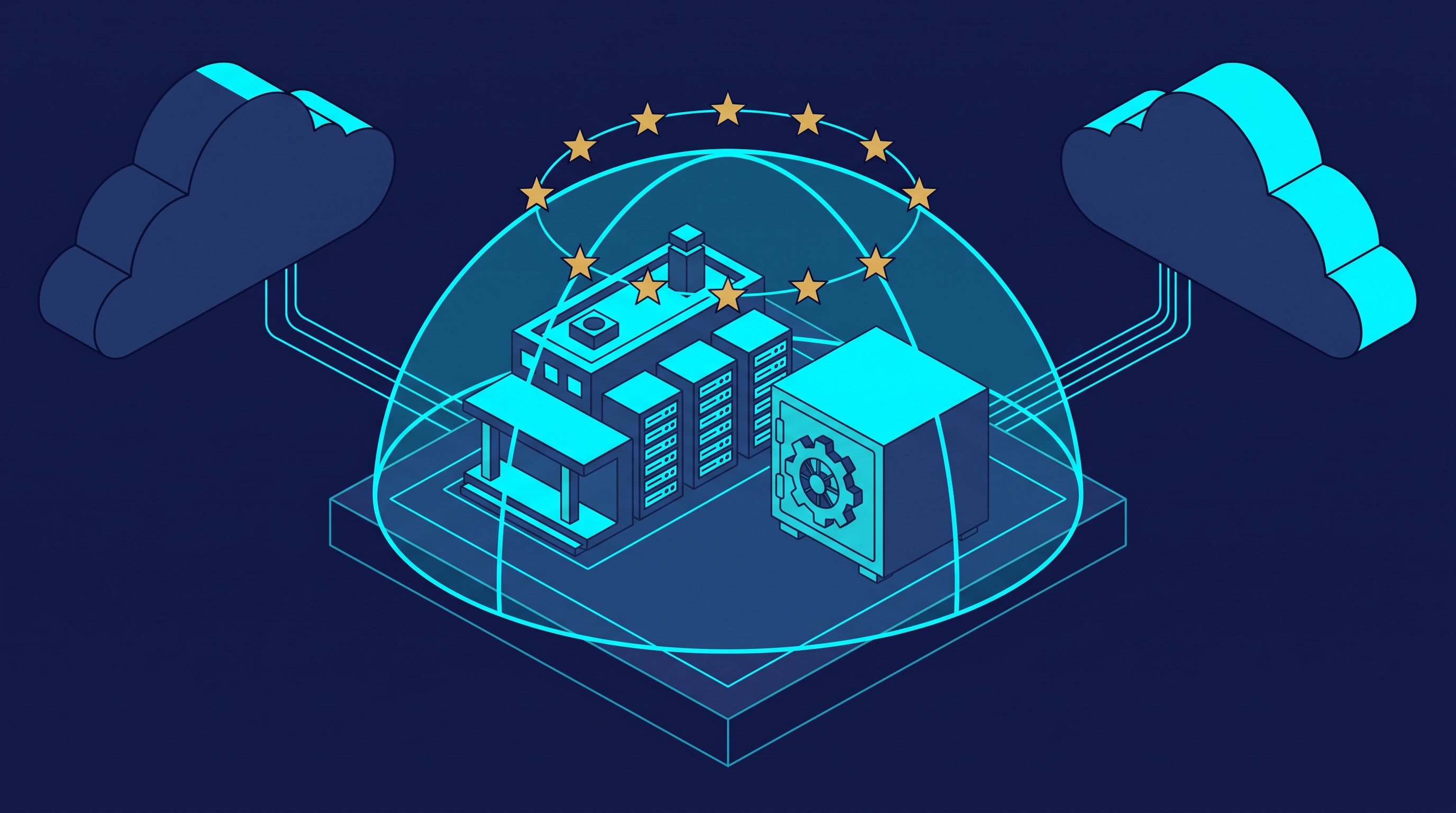
Enter the eSIM: a secure, programmable version of the traditional SIM. Originally designed to simplify connectivity, eSIMs now power a smarter form of authentication. Tied directly to the device’s network layer, eSIM acts like a secure enclave - tamper-resistant, invisible to users and universally compatible while riding on top of the secure telecom network itself.
Once downloaded, the eSIM functions as a secure, tamper-resistant environment, much like Apple’s Secure Enclave, but with the advantage of being universally supported across devices and backwards-compatible with existing mobile infrastructure. It can securely hold singular or universal secrets and operate across multiple services, enabling seamless authentication for both employees and subscribers without the need for extra hardware or manual steps.
It eliminates the weaknesses of SMS and app-based authentication. No passcodes to enter. No messages to intercept. No apps to juggle. Just silent, persistent verification. It’s a smarter way to establish trust, especially when paired with biometrics or behavioral data from the mobile device.
Why Network-Level Identity is Harder to Break
eSIM-based identity is fundamentally more resilient. It holds encrypted credentials in a secure element inaccessible to third parties. And when deployed via cloud-based Telecom-as-a-Service platforms, it becomes programmable across borders and adaptable to policy requirements.
Unlike legacy SIMs or one-off carrier solutions, cloud-native telecom models don’t just inherit carrier trust—they create an independent cryptographically assured layer that operates globally. Our eSIMs aren’t pass-throughs; they are programmable identities, controlled at the telecom layer and designed for financial-grade verification. Combined with biometrics, they enable non-repudiation and frictionless proof of identity.
Cloud-based telcos that integrate eSIM authentication directly address the shortcomings of fragmented, regional carrier-led solutions. Unlike traditional offerings limited by geography or legacy infrastructure, these platforms are global by design, providing a unified framework for identity and authentication that spans markets, networks and regulatory environments. These cloud-native solutions are also significantly more cost-effective than traditional OTP authentication models, which often require large capital investments, complex integrations, and ongoing operational overhead in addition to the origination and termination fees charged to enterprises just to connect with their own customers.
This isn't a theory. It’s already happening. Tier-1 carriers and cloud-native platforms are betting on eSIM authentication. But while many offerings remain limited by geography or legacy constraints, TaaS unlocks global reach, faster deployment and lower operational overhead.
Redefining Digital Security at the Network Layer
Financial services have long lived with the trade-off between strong security or good customer experience. 2FA was the compromise. But in a mobile-first, global economy, these limitations no longer scale, are sufficiently secure or cost-effective.
eSIM authentication is emerging as the new baseline. It doesn’t just protect - it transforms. It turns identity into infrastructure. For banks, fintechs and payment platforms, this means a universal trust layer that travels with the user, scales across markets, and works silently in the background. Security should feel invisible. With eSIM authentication, it finally can.